

Banking technology has helped automate much of the bookkeeping however anyone working in financial records will tell you that automation isn’t always perfect. Clients still send PDF statements, bank feeds aren’t working, and historical transactions aren’t accessible. If this happens, someone must convert a document intended for reading into data that accounting software could actually use.
The use of a statement converter can reduce the quantity of repetitive work that is required. Docubrew will convert the information of your bank statement into structured spreadsheet data.
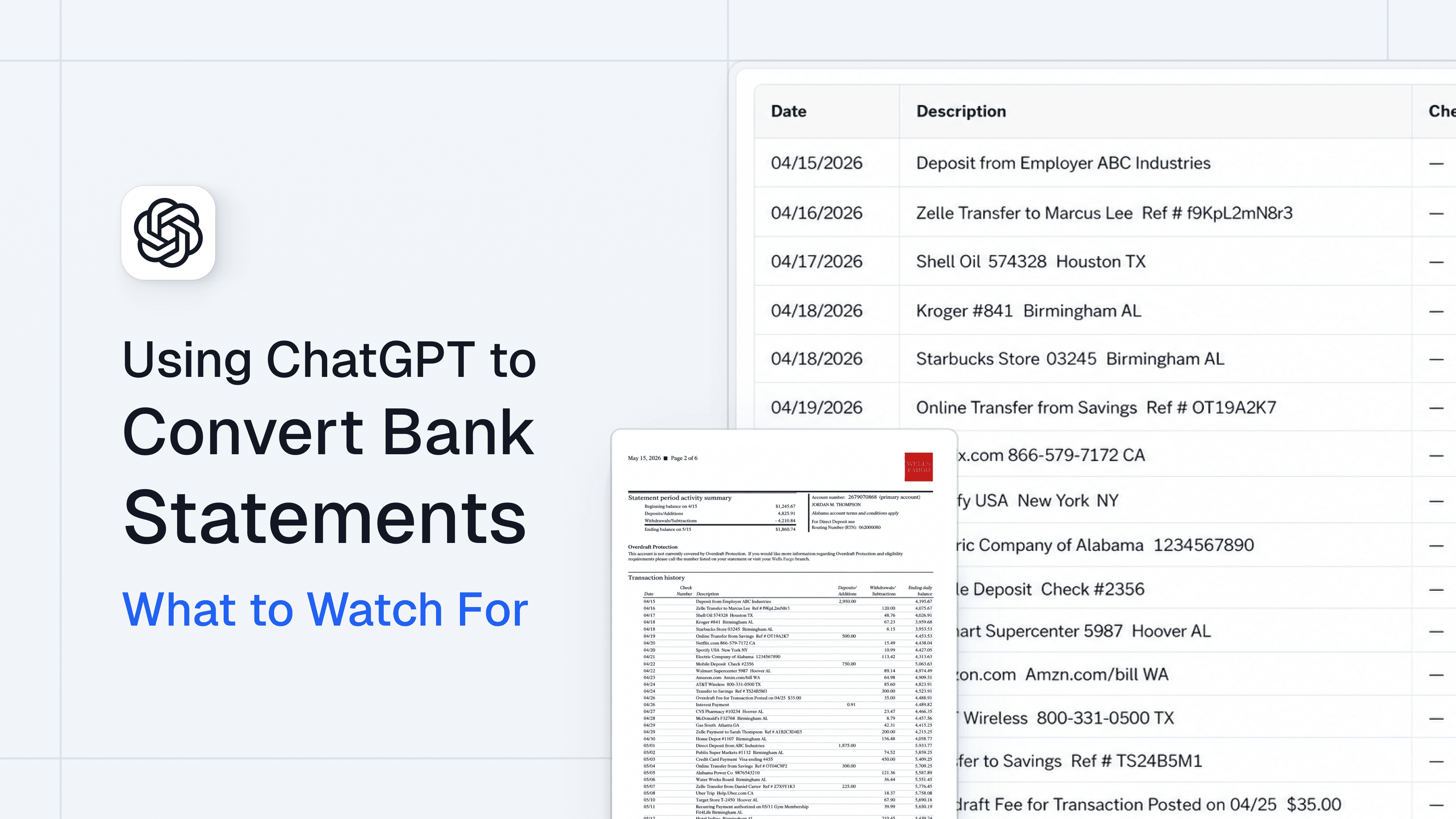
Image credit: docubrew.com
When a PDF becomes the missing part
Imagine a bookkeeper preparing an annual reconciliation for clients. The accounting platform has some recent transactions, but a few older months are not included. The client downloaded PDF original statements.
In the past, creating the months of those years would have required many hours of copying and pasting numbers into a spreadsheet. The bank statement in PDF format to Excel workflow is an effective alternative. Docubrew can extract transaction information from digital PDFs and scanned bank statements made of paper.
A reduced manual transcription process can lower the chance of mistakes when typing. This is a big benefit for professionals that need to transfer bank accounts regularly into Excel.
Save the Pages that Actually Count
Bank statements are not only of transactions. A 12-page statement could include a cover sheet, account summary, disclosures and notices and a few pages of the actual bank activity.
Docubrew allows users to look at a document before they select the appropriate pages for conversion. That makes it easier to convert bank statements to Excel without bringing unrelated statement content into the working dataset.
The file created is ready to use by accounting platforms such as QuickBooks, Xero and FreshBooks.
CSV offers a flexible accounting workflow
CSV is still useful since it is widely supported by databases, spreadsheets and accounting programs. Docubrew will convert your bank statements to CSV by using the transaction tables that are contained within the report.
The same workflow could help companies convert bank statements to CSV when reconstructing historical books as well as handling a client cleanup project, analyzing missing transactions, or creating the data needed for reconciliation.
Accounting firms that have to deal with clients or multiple statements can benefit from batch processing.
Financial documents should be treated with care and privacy controls
Processing financial records is not only about efficiency. Bookkeepers and accountants can be also concerned about the place they work from to process financial records.
Docubrew has two methods. Its Windows desktop software processes files locally on the user’s PC, so the statements aren’t uploaded for conversion. If you prefer using a browser-based workflow may select the cloud encryption option which allows uploaded files to be automatically deleted within 24 hours.
The platform may range that ranges from Excel software to bank statements that depend exclusively on remote processing.
Turning Document Archives Back Into Working Data
Although PDF statements are great records, they are inconvenient to utilize when transactions have to be reconciled or sorted. They also can’t be imported, filtered, re-organized and so on. Scanned documents could be an issue because the transaction information could only be present as an image.
Docubrew provides a mix of statement parsing and OCR for documents that have been scanned. It gives accountants bookkeepers, and businesspeople easy way to convert archived financial documents into actionable transaction data.
This simple remedy can help speed up an inefficient workflow by preserving the original bank statement while changing its transaction table into data that you can use.