

In the past, constructing a quality 3D asset demanded a mixture between technical expertise, artistry, and significant amounts of time. Designers needed to manually shape shapes applying textures, adjust lighting and make the files for various platforms. Artificial Intelligence is changing the way that designers work. Modern tools based on AI can be used to create 3D models very quickly. It is common for them to start by presenting a text message or simple photo.
This change will make 3D design accessible to experts and novices, allowing to produce more quickly and more imaginative exploration.
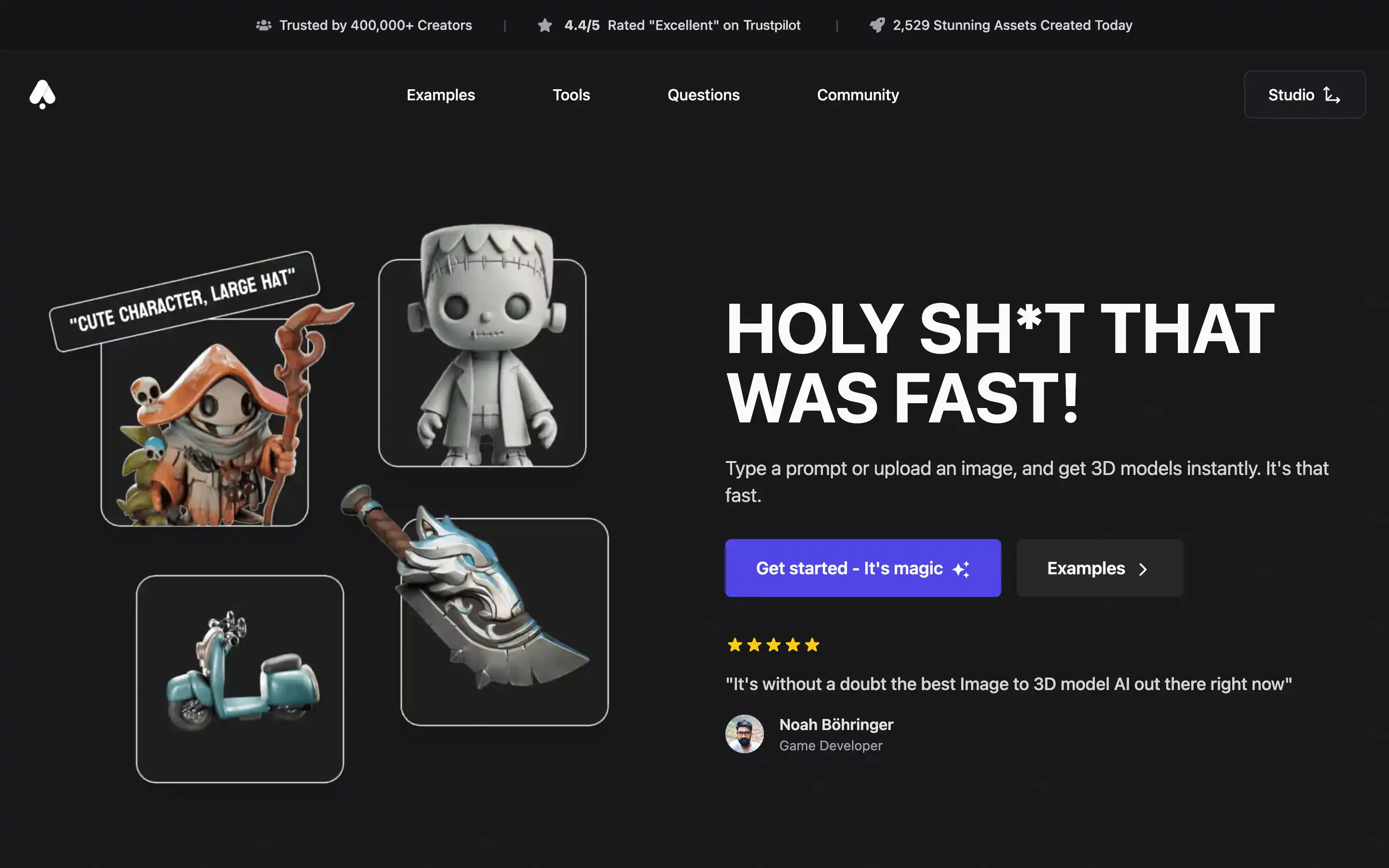
In a matter of minutes, you can go from picture to 3D model in just a few minutes.
The image-to-3D model technology is a breakthrough in this field. Artificial intelligence uses an image to determine shapes and depths, then creates a 3D model.
This is especially beneficial in industries that depend on the accuracy of their visuals and speed. Architects can view the structures before they begin the construction process, while product designers and game developers can swiftly prototype. Even educators and marketers are enjoying the ability transform visual ideas into interactive 3D content.
The savings in time are substantial. The savings from time are significant.
The Reasons AI 3D Model Creation Is becoming more popular
AI 3D models are in huge demand because they streamline complex workflows. Artificial intelligence that is trained on huge datasets can produce realistic materials, shapes and ensure consistency and accuracy.
This increases not only productivity but also the level of creativity. Designers are able to test numerous variations of a idea in a short amount of period of time, evaluate the results, and finally choose the best option. The rapid iteration process has become essential to industries like virtual reality, film production and advertising.
Accessibility is a further advantage. Modern platforms allow people to produce professional-quality assets, even if they’ve got little or no 3D experience.
Uninterruptible Integration into Workflows for Professionals
The importance of compatibility is as much for professionals as speed. The modern AI 3D models have been designed to seamlessly integrate with existing pipelines. The models are exported to widely supported formats like FBX and OBJ. They are also compatible with rendering software as well as 3D printing devices.
Organized asset databases also play an important role in the process of achieving an efficient production. The ability to search for and find every model produced can help teams manage their projects. Filtering files by tags, downloading large quantities of them and accessing older versions swiftly will save you time and administrative work.
Security and privacy functions have also become standard. This lets creators keep assets created private, ready for use immediately in commercial or creative endeavors.
AI Tools for Control and Precision
Many people believe that 3D modeling AI is a tool for automating the process. However the latest AI usually comes with detailed adjustment tools. Users can make precise measures, set pivot points, and guarantee the correct placement of objects within scenes. These capabilities are vital for the animation of architectural models, and simulation, where precision is crucial.
Artificial intelligence can also be used for texture generation. This allows creators of realistic materials to quickly produce the textures. It can reduce the time needed for painting by hand while still maintaining a professional appearance.
Future of 3D Model AI
As artificial intelligence continues to evolve, the possibilities for 3D model AI will expand further. While AI continues to improve more advanced models are likely to be built in complete environments optimise assets and modify models without additional steps.
Platforms designed specifically for this purpose are showing the potential of these tools. 3D AI Studio the ultimate studio for 3D assets reflects the new generation of software that is designed to make creation easier, simplify workflows, and help creators transition from an idea to a finished model with the least amount of effort.
Conclusion
The digital content industry is being transformed by the ability to quickly move from a conceptual idea to an actual piece of work. Creators will no longer be restricted by manual workflows. With modern AI 3D modeling tools and image-to-3D model technology, they can move from concept to finalized product quickly.
As these technologies continue to improve as they do, they’ll play a larger influence on the industries from entertainment and gaming to engineering and education which will make high-quality 3D creation faster, smarter and easier to access than ever before.